#BWNFridayPost: Citation Transparency Chrome Extension

This chrome extension shows probabilistic gender information when you search for papers on Google Scholar. As described by the creator, many fields do not cite men and women at rates that parallel the gender balance in the field, often due to implicit bias. By explicitly seeing the likely genders of the authors you’re reading, it can help remind people to keep these implicit biases in mind and counteract them when necessary. This extension was nominated to our DEI Repo by a faculty member, who stated that, “This resource raises awareness of gender bias as I am using PubMed and GoogleScholar to research the literature in my field relevant to the paper I am currently writing. It helps me to flag the tendency to pass over a marginalized scholar in favor of a majority scholar.” Further, the nominator stated that: “The resource made me question the algorithms that order search outcomes on PubMed and GoogleScholar, and whether those algorithms have their own biases. For example, if such algorithms use citation count in their calculations, they would automatically be biased against marginalized groups. What that means for me is that when I search on PubMed and GoogleScholar, I should not assume that the hits at the top are an equitable assessment of the work relevant to my search.”

Check out the extension here, our DEI repo here, and nominate other resources to our repository here!

Computational Neuroscience, Neurotechnology and Neuro-inspired AI Autumn School

school link
October 25 – October 31, 2023
Organizing Committee: Saugat Bhattacharyya, Cian O’Donnell, KongFatt Wong-Lin, Damien Coyle, Bronac Flanagan, Muskaan Singh, Louise Gallagher, Elaine Duffy, Gerald Hasson, Cheryl Mullan, Eoghan Tucker

Speakers gender ratio: 4 women, 9 men (31%)
Estimated base rate of women in the field: 26%*
BWN rating: 3, within 1 standard deviation above base rate

*Method of estimation: previously established base rate of women in the computational neuroscience field

#BWNFridayPost: Community-engaged approach can help address bias and lack of diversity/inclusion in neuroscience research

link to full article and the paper it is discussing (authors: Shayna La Scala, Jordan L. Mullins, Rengin B. Firat, Kalina J. Michalska)

This article by Iqbal Pittalwala interviews Dr. Kalina Michalska (one of the authors of “Equity, diversity, and inclusion in developmental neuroscience: Practical lessons from community-based participatory research“), and discusses the benefits and importance of Community-Based Participatory Research (CBPR) for fighting bias in research. CBPR works to “actively involve the population of interest in the research process and require[s] collaboration and trust between community partners and researchers” for fighting bias in research.

Here are some insightful quotes from the interview article:

  • “CBPR asks: how will the lives of people in communities be impacted by a specific piece of research and do those people have a voice in whether and how the research will be conducted?”
  • “…as magnetic resonance imaging and other neuroscientific techniques get more incorporated into the mental health research agenda, it is incumbent on neuroscientists to pay close attention to diversity and representation in their work. Regrettably, in neuroscience, many discussions around these issues today do not involve the community under study.”
  • “We need to open communication channels and check in with our research participants to help minimize such biases,” she said. “Already, neuroscience research has a severe underrepresentation of marginalized groups as study participants; Black, Latina, and other women of color are conspicuously absent. Such exclusion directly harms communities and prevention and intervention approaches, such as medical protocols, mental health recommendations, and governmental policy creation, can get biased. CBPR can be a remedy and facilitate impactful change in neuroscience.”
  • “Including communities in the research design and interpretation can be a powerful learning opportunity for community members to experience first-hand how research is done,” she said. “This could especially empower young people.”

For more details about how this can be incorporated into a neuroscience research project, read the full paper it’s based on here!

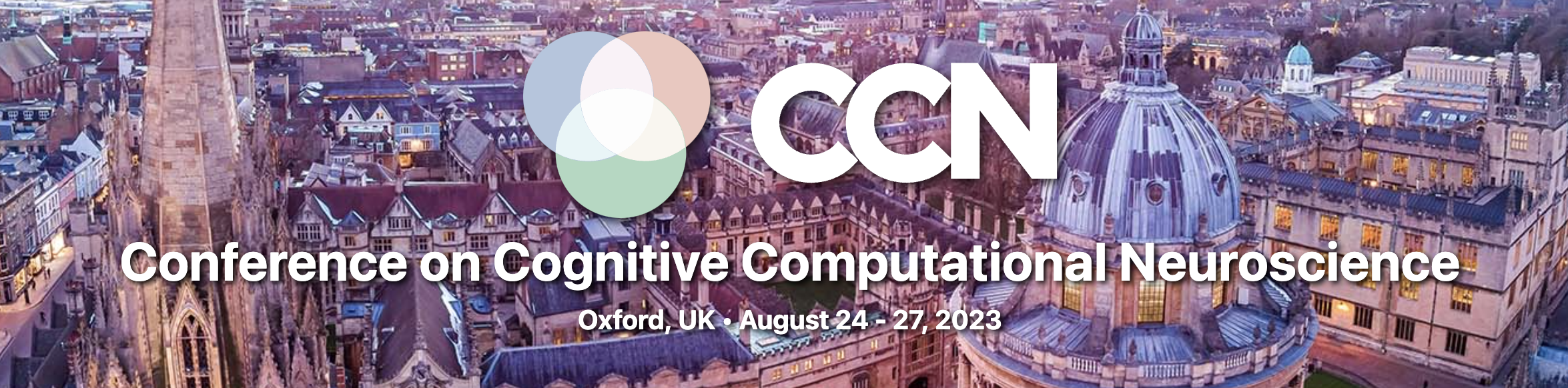
CCN 2023: Conference on Cognitive Computational Neuroscience

conference link
August 24 – August 27, 2023
Programme Committee: Leyla Isik, Megan Peters, Laura Gwilliams, Gemma Roig, Nico Schuck, Eric Schulz, Maria Eckstein, Benjamin Peters, Jean-Remi King

Speakers gender ratio: 3 women, 3 men (50%)**
Estimated base rate of women in the field: 39%*
BWN rating: 3, within 1 standard deviation above base rate

*Method of estimation: previously established base rate of women in the computational neuroscience field and the cognitive neuroscience field

**We will update as more confirmed speakers get added!

#BWNFridayPost: “It Matters Who Does Science” by H. Holden Thorp

link to full article

This article is insightful, and discusses why and how it matters who is doing the science. Some quotes from it include:

“The soundbite “trust the science” has been circulating recently. This framing is unfortunate. Because “the science” in this context is usually a snapshot of ideas or facts in a particular moment—and often from the perspective of a small number of people (or even one person). It would have been better to use a phrase like “trust the scientific process,” which would imply that science is what we know now, the product of the work of many people over time, and principles that have reached consensus in the scientific community through established processes of peer review and transparent disclosure.”

“A monolithic group of scientists will bring many of the same preconceived notions to their work. But a group of many backgrounds will bring different points of view that decrease the chance that one prevailing set of views will bias the outcome. This means that scientific consensus can be reached faster and with greater reliability. It also means that the applications and implications will be more just for all.”

“Scientists should embrace their humanity rather than pretending that they are a bunch of automatons who instantly reach perfectly objective conclusions.”

Read more here!